





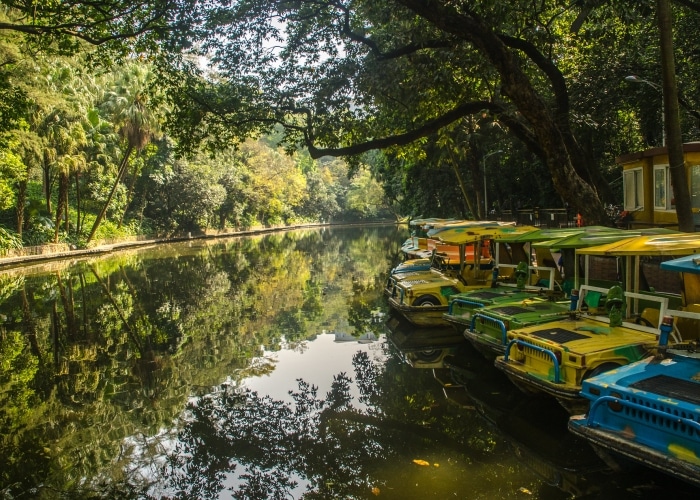
Right in the heart of the city, Yuexiu Park feels like a long, deep breath. Once past the entrance, the greenery seems to close gently around visitors. The air cools, almost instantly.
This wide stretch of nature spreads across several hills. Paths rise, dip, then disappear among the trees. Here and there, a break in the foliage reveals rooftops from nearby neighborhoods. Yuexiu Hill offers one of those pauses. A simple lookout, a broad view, a brief moment when the city feels farther away.
A little farther along, the Five Rams Statue appears without warning. The symbol carries weight, and it’s clear locals are attached to it. People stop, look at the stone, search for the details mentioned in local stories.
Continuing on, the Zhenhai Tower stands over the landscape. Its red façade contrasts sharply with the surrounding green. Inside, a small museum displays a handful of historic pieces. From the terrace, the light shifts throughout the day, changing the entire perspective.
The park also includes the Sun Yat-sen Memorial Hall. Its elegant lines and quiet gardens naturally slow the pace. A few steps away, ponds reflect a soft glow. Families wander, groups practice tai chi, and strollers linger with no particular reason. The place unfolds at its own rhythm, slowly and effortlessly.
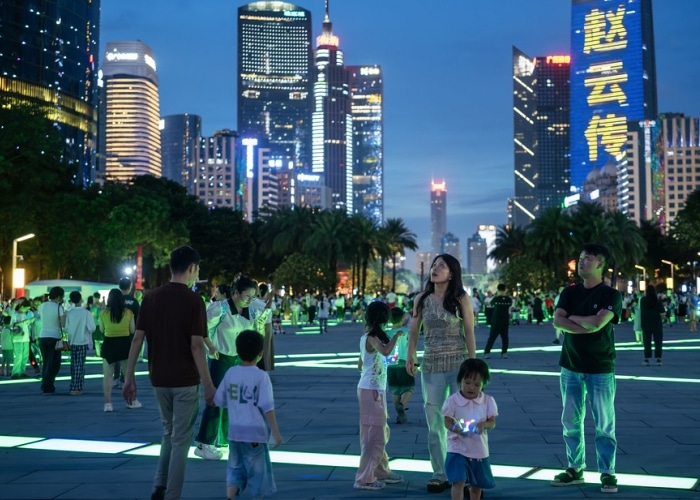
Located in the Tianhe district along the north bank of the Pearl River, Zhujiang New Town reveals a level of modernity that can still catch visitors off guard. Glass towers rise high, bounce back the sunlight and carve sharp lines into the sky. People look up without even noticing they’re doing it.
At the center, the wide Huacheng Square opens into a space that feels almost quiet despite the city surrounding it. Footsteps echo differently there, slower, softer. Pools, gardens and a few scattered palm trees add a gentle warmth. And to the south, the Canton Tower appears, glowing with colors, a steady landmark that follows each step across the district.
The Guangdong Museum sits close by. Its rooms trace the history of the region through objects, scenes and fragments of the past. A short walk away, the Guangzhou Opera House captures attention. Its rounded curves, slightly surreal, contrast with the straight lines of the surrounding towers. Many visitors pause simply to understand how the building holds together.
During the day, Zhujiang New Town stays peaceful. Locals sit near the fountains, others photograph the reflections on the façades. When evening arrives, the scene shifts instantly. The towers light up, the ground takes on new shades and the whole area feels like another city.
Around Flower City Avenue, cafés and modern restaurants bring life to the walk. Some visitors linger there, watching the movement of people passing by. A quiet way to take in Guangzhou’s rhythm.
Just north of downtown, Baiyun Mountain rises almost like a refuge. A wide stretch of greenery that feels as if it’s been waiting for visitors. As soon as they enter, the trees close in slightly, the air cools, and the noise of the city starts to fade.
The main path climbs gently. In some places, the view opens up and reveals Canton’s skyline, distant and softened by the pale mist that gave the White Cloud Mountain its name. Moxing Ridge, higher still, draws those who enjoy the climb. Up there, people often linger in silence for a few minutes, taking in the view.
A little farther down, Yuntai Garden shifts the mood. Bright colors, tidy flowerbeds, a faint floral scent. The garden encourages a slower pace, almost unplanned, as visitors notice shapes and subtle shades. Along certain paths, groups of locals practice tai chi. Others chat quietly in the shade.
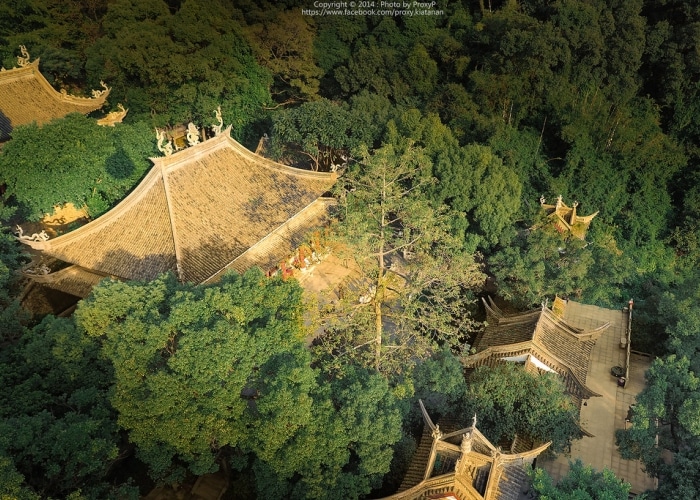
Baiyun Mountain is also home to the Nengren Temple. It appears after a small detour, slightly removed from the main path. Incense rises, footsteps echo softly on the steps. The place soothes with its delicate architecture and gentle colors. Everything seems to slow around the temple, as if time hesitated before moving on.
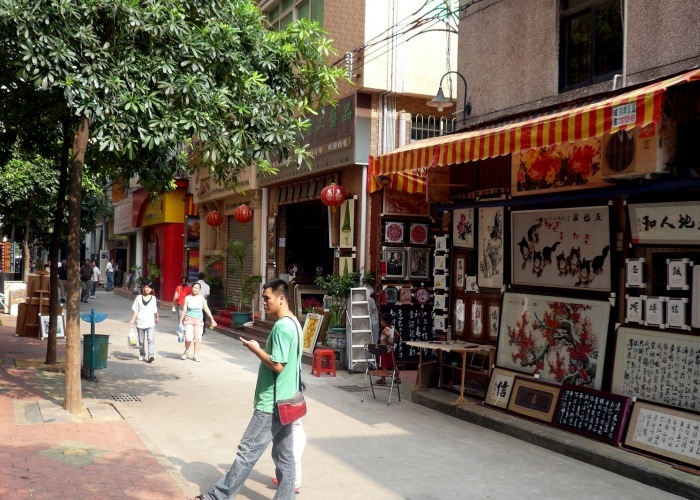
Located east of Shenzhen, a little over an hour from Canton, Dafen Art Village feels like a world of its own. Visitors often arrive surprised by the atmosphere, a mix of paint scents and voices drifting out from open studios. The neighborhood, once fairly quiet, has gradually grown into a dense network of workshops and galleries.
The Dafen Art Museum sits at the center. Its exhibitions change regularly and highlight contemporary Chinese artworks. A wide range of styles fills the rooms. Stepping back outside, the nearby studios immediately catch the eye. Artists work intently, brush in hand, sometimes silent, sometimes chatting with someone passing by.
Wandering through the alleys, one finds shops whose walls are almost completely covered in paintings. Some recreate well-known masterpieces. Others display more personal pieces, occasionally surprising, always intriguing. This variety pulls visitors in and encourages them to follow yet another side street.
For many, one of the highlights is commissioning a portrait. The artists capture facial features with remarkable accuracy. The exchange, often simple and friendly, leaves a warm impression. It becomes a memory that lingers long after leaving the village.
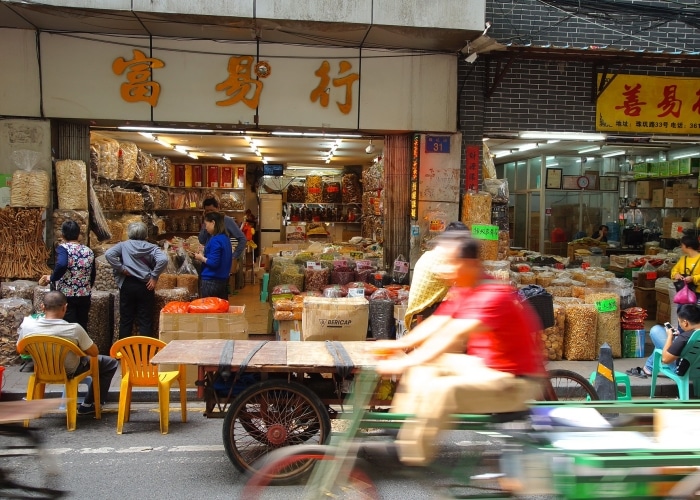
West of Shamian Island, Qingping Market offers a direct glimpse into Guangzhou’s everyday life. The moment you step in, colors burst out, scents mix together and everything seems to move at once. Locals weave through quickly while visitors linger, drawn in by the atmosphere.
The narrow alleys overflow with stalls. Medicinal herbs, spices, tea, fruit from across Guangdong, there’s a bit of everything and usually in generous amounts. Each vendor has a particular way of calling out, sorting goods or handing over a small bag. Interactions happen fast, almost like a daily choreography everyone knows by heart.
Farther along, the section devoted to medicinal plants catches the eye. Rows of bags filled with roots and bark create a striking display. Conversations drift through the air about remedies, about what treats what. Listening to these exchanges gives a different perspective on traditional medicine.
A little deeper into the market, the mood softens. Tea shops encourage people to slow down. Some offer a cup of oolong or white tea. Time seems to pause for a moment. A welcome break in the constant motion of Qingping, a market that reveals far more than it first suggests.