











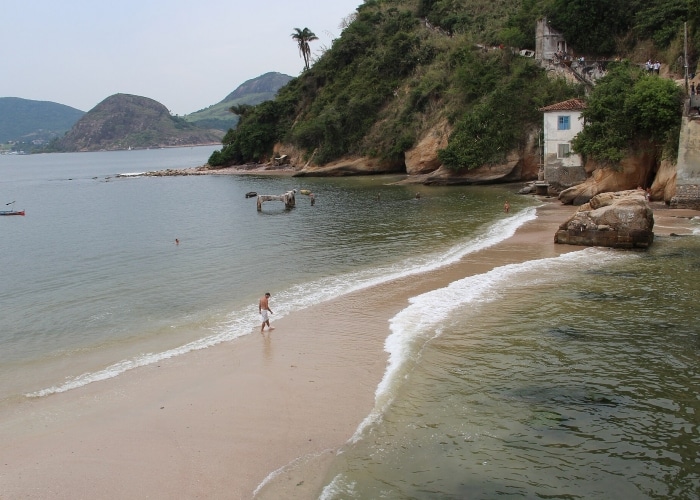
In the heart of the Brazilian Amazon, Manaus is one of the main gateways to the rainforest. The city combines urban life, historic architecture and easy access to rivers and natural areas, making it an ideal starting point for exploring the region with a local guide.
Its most famous landmark is the Teatro Amazonas, an impressive opera house built during the rubber boom. Its colorful dome and richly decorated interior recall a period when Manaus was one of Brazil’s wealthiest cities.
Beyond the city, discover the famous Meeting of the Waters, where the dark Rio Negro and the lighter Solimões flow side by side for several kilometers before gradually mixing. Excursions into the surrounding rainforest also offer opportunities to explore flooded forests and observe some of the wildlife of the Amazon.
Back in Manaus, visit the Mercado Municipal Adolpho Lisboa to discover tropical fruits, fish, spices and regional specialties such as tambaqui and tacacá.
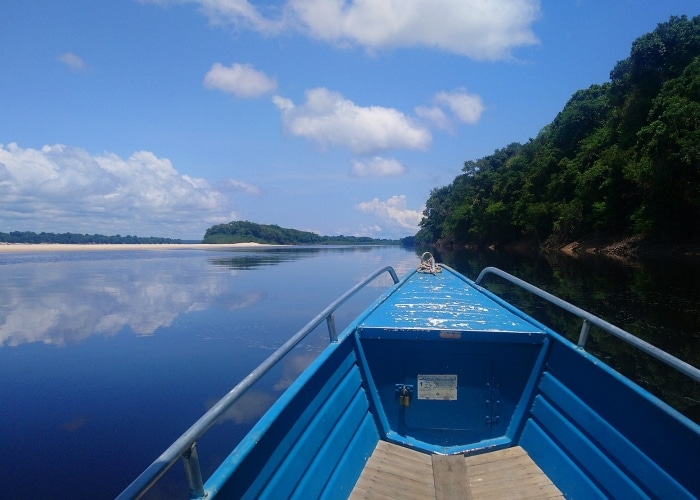
Scattered across the Rio Negro, the Anavilhanas Archipelago forms one of the largest river archipelagos in the world. Its maze of islands, channels and flooded forests offers a remarkable setting for discovering the landscapes and wildlife of the Amazon.
Depending on the season and water level, the area can be explored by boat or canoe, passing through narrow channels surrounded by dense vegetation. Birds, monkeys and other wildlife may be spotted along the way, although encounters in the rainforest are never guaranteed.
Guided excursions also provide an opportunity to learn how the ecosystem changes between the wet and dry seasons. Exploring with a local guide helps visitors understand the forest, its waterways and the communities that live throughout the region.
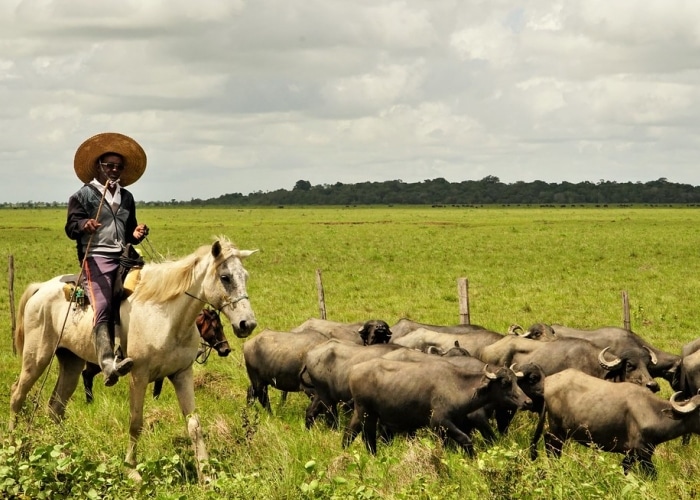
At the mouth of the Amazon River, Marajó Island combines wetlands, forests, beaches and a culture strongly associated with water buffalo. Its landscapes and traditions make it one of the most distinctive destinations in northern Brazil.
Around Salvaterra and Soure, beaches such as Joanes and Pesqueiro offer wide stretches of sand and a very different atmosphere from the dense rainforest further inland. Water buffalo are a familiar sight and have become closely linked to everyday life on the island.
Marajó is also known for Marajoara ceramics, inspired by the sophisticated pre-Columbian culture that developed on the island. Visiting local workshops and museums provides a better understanding of this important part of the region’s Indigenous heritage.

Capital of Maranhão, São Luís lies outside the Amazon rainforest itself but can be included in a wider journey through northern Brazil and the eastern Amazon region. The city is particularly known for its colonial heritage and strong Afro-Brazilian cultural influences.
Its historic center, listed as a UNESCO World Heritage Site, is characterized by streets lined with colonial buildings decorated with colorful azulejos. Wandering through the old town reveals squares, markets and historic houses that reflect several centuries of the city’s history.
São Luís also offers an Atlantic coastline and a distinctive regional culture shaped by music, festivals and local cuisine. A guided visit can provide useful context before continuing toward other destinations in Maranhão or northern Brazil.
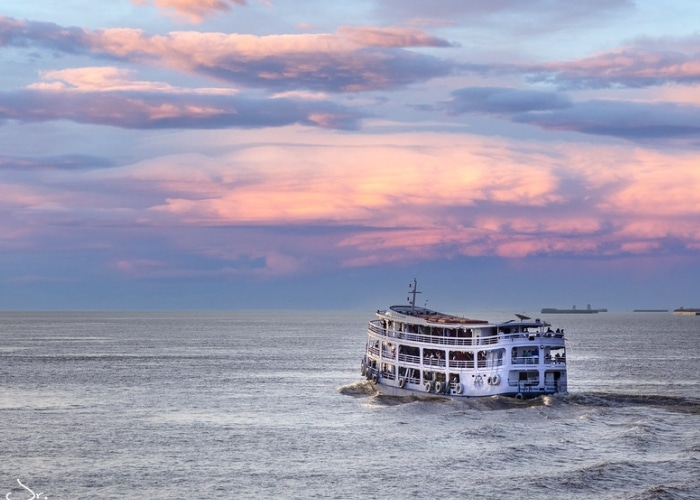
Located where the Tapajós and Amazon rivers meet, Santarém is another excellent gateway to the Brazilian Amazon. The region combines immense waterways, rainforest and freshwater beaches, offering several very different ways to experience the Amazon.
One of the first sights to discover is the meeting of the Tapajós and Amazon rivers, whose contrasting waters flow alongside each other before gradually blending.
Continue to Alter do Chão, a village on the Tapajós known for its white-sand river beaches. During the appropriate season, sandbanks emerge from the river and create landscapes that have made the area one of the best-known destinations in the Brazilian Amazon.
Nearby, the Tapajós National Forest, or Flona do Tapajós, can be explored on guided hikes and community-based excursions. Trails through the rainforest provide an opportunity to discover towering trees, local ecosystems and the relationship between the forest and the communities that live there.