





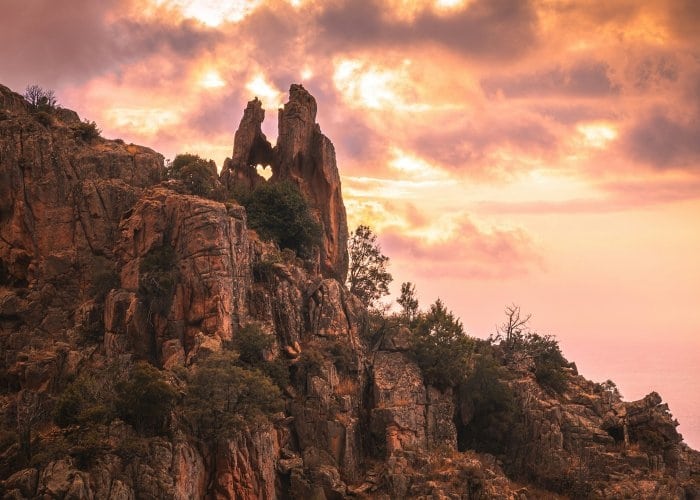
On the west coast of Corsica, between Ajaccio and Calvi, the Calanques de Piana offer a landscape that’s hard to forget. Here, towering formations of red granite rise above the Mediterranean, creating unusual shapes that resemble animals or human faces. This natural site, listed as a UNESCO World Heritage Site, is one of the island’s most remarkable landscapes.
One of the best ways to discover the Calanques is to follow the D81 road between Piana and Porto. Around every bend, the scenery changes. The rocks take on unexpected shapes, cliffs plunge towards the sea, and Mediterranean scrub clings to the hillsides. Late in the afternoon, the sunlight brings out the warm orange tones of the stone, giving the landscape an almost unreal atmosphere.
But the Calanques de Piana are also worth exploring on foot. Several walking trails lead away from the road, offering a closer look at this extraordinary setting:
– The Château Fort Trail: a pleasant walk starting near the Tête du Chien rock formation, with beautiful views over the Gulf of Porto.
– The Sentier des Muletiers: an old paved mule track winding through the rock formations, with stunning panoramic views.
– Capo Rosso: a more challenging hike leading to the Genoese Tower of Turghju, perched high above the sea.
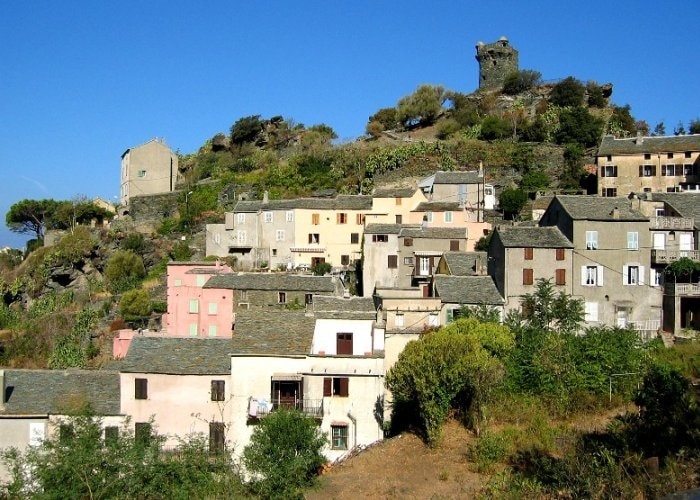
On the western coast of Cap Corse, a few kilometres north of Saint-Florent, Nonza seems to hang between the sky and the sea. Clinging to a cliffside, this small village reveals a striking setting, with its stone houses, narrow streets and the endless blue of the Mediterranean stretching into the distance.
A visit naturally begins in the heart of the village, around the Church of Sainte-Julie, a beautiful Baroque building. Following the cobbled streets leads to the Paoline Tower, built in 1760 on the orders of Pascal Paoli. From this viewpoint, the coastline stretches out below, along with an immense dark beach that contrasts beautifully with the blue sea.
This beach at Nonza, covered in grey and black pebbles, is one of the most unusual sights in Cap Corse. Seen from above, its sheer size and distinctive colour are impressive. Some visitors even arrange pale stones into large messages that can be read from the cliffs above.
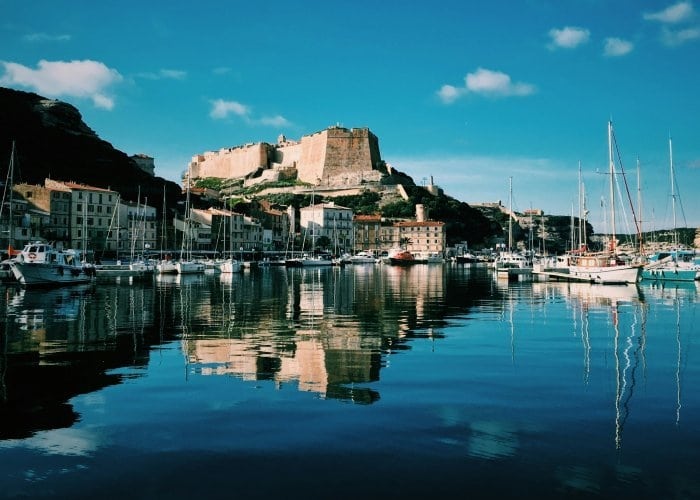
At the southernmost tip of Corsica, facing Sardinia, Bonifacio seems to defy gravity. Perched on towering white limestone cliffs, this medieval town overlooks a sea of turquoise waters. Some houses appear to hang over the edge, creating one of the most breathtaking views on the island.
The best way to explore Bonifacio is to start in its old town. Behind the citadel walls, cobbled streets wind between historic buildings, small squares and centuries-old churches. The Bastion de l’Étendard, overlooking the entrance to the harbour, offers a glimpse into the town’s military past, along with magnificent views of the surrounding landscape.
A little further on, the King of Aragon’s Stairway offers a completely different experience. Its 189 steps, carved directly into the limestone cliff, descend towards a narrow passage just above the sea. Climbing back up takes some effort, but the scenery makes it worthwhile.
Bonifacio is equally impressive from the water. A boat excursion offers spectacular views of the cliffs, passes along sea caves and reveals the houses perched high above the rocks. Some trips also reach the Lavezzi Islands, a small archipelago known for its crystal-clear waters and striking granite formations.
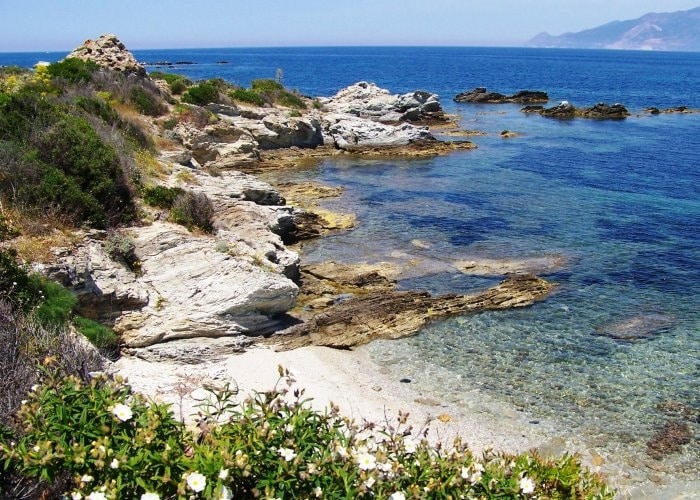
In northern Corsica, between Saint-Florent and the Ostriconi Valley, the Agriates Desert reveals a surprising side of the island. Despite its name, this vast 15,000-hectare region is nothing like a sandy desert. Instead, Mediterranean scrub covers the hills, walking trails cross rocky landscapes, and the sea appears unexpectedly between the slopes.
Once used extensively for farming and livestock grazing, this protected area still bears traces of its pastoral past. A few old shepherds’ huts remain, recalling a time when local families cultivated the land and raised their animals here.
What draws most visitors to the Agriates, however, is the wild coastline. Saleccia Beach, with its white sand and transparent waters, is considered one of the most beautiful beaches in Corsica. Not far away, Lotu Beach offers an equally peaceful natural setting, while the more remote Ghignu Beach feels wonderfully isolated.
There are several ways to reach these beaches. Boat shuttles leave from Saint-Florent, while rough tracks suitable for 4×4 vehicles cross the inland hills. Those who enjoy walking can follow the Agriates coastal trail, which winds past secluded coves, rocky headlands and Mediterranean vegetation.
At the western edge of the region, Ostriconi Beach reveals another landscape, with its sand dunes, pale shoreline and mountains rising in the background.
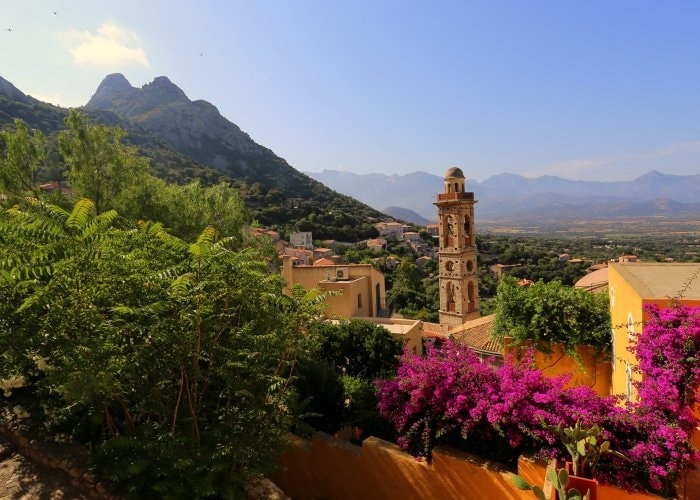
In northwestern Corsica, between Calvi and L’Île-Rousse, the Balagne region reveals a countryside dotted with villages perched high in the hills. Stone houses cluster around old churches, olive groves cover the slopes, and the Mediterranean stretches across the horizon. Often called the “Garden of Corsica”, this region is well worth leaving the beaches behind to explore its winding country roads.
Among the villages of Balagne, Sant’Antonino stands out for its remarkable location. Perched nearly 500 metres above sea level, this medieval village is a maze of cobbled lanes and vaulted passageways. From the top, sweeping views extend across the mountains, valleys and coastline.
Just a few kilometres away, Pigna has a character all its own. Behind its blue-shuttered houses, potters, musical instrument makers and other craftspeople keep traditional skills alive. The village is also known for its concerts of traditional Corsican music, particularly its famous polyphonic singing.
Continuing along the road, Corbara charms visitors with its old streets and religious heritage, while Speloncato, built into the mountainside, offers beautiful views across the Reginu Valley. Closer to Calvi, Lumio overlooks the bay and provides a pleasant starting point for a walk to the ruins of Occi, an abandoned village.