








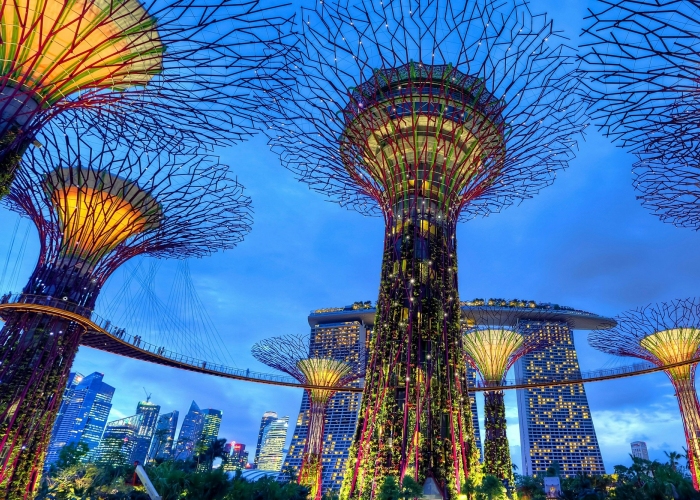
In the south of downtown Singapore, just behind Marina Bay Sands and facing the bay, Gardens by the Bay reveals an almost unreal landscape. This vast futuristic park blends nature and architecture in a setting that shifts with the light throughout the day.
From the entrance, the famous Supertree Grove immediately draws attention. These giant vertical gardens rise above the park and, from the OCBC Skyway, offer sweeping views over Marina Bay and the skyline. A short walk away, the Flower Dome immerses visitors in Mediterranean-style scenery bathed in soft light, while the Cloud Forest unveils an impressive indoor waterfall and a suspended tropical world.
By late afternoon, the atmosphere becomes calmer. The paths around Dragonfly Lake invite you to slow down, away from the city’s pace. Then comes Garden Rhapsody, the nighttime show that turns the Supertrees into an almost hypnotic display of light.
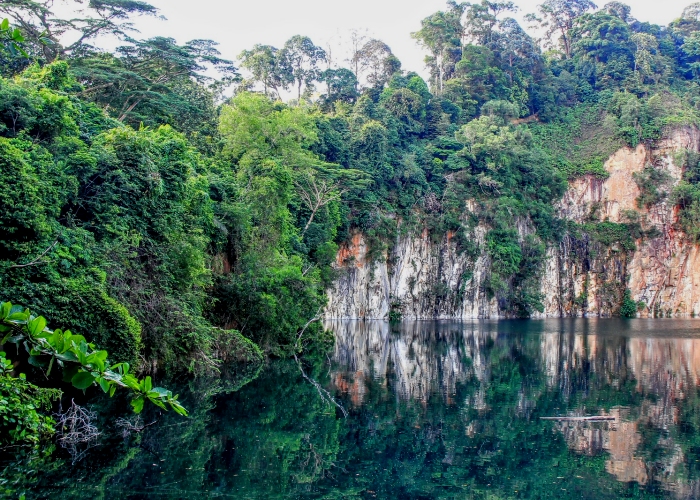
A few MRT stops away from the lively district of Orchard Road, one of Singapore’s most preserved green spaces quietly unfolds. Bukit Timah Nature Reserve offers a striking contrast to the skyscrapers of Marina Bay.
From the very first steps, dense vegetation wraps the trails in an unexpected coolness. Bukit Timah Hill, the highest point in the country, is reached by a gentle climb surrounded by tropical trees and the calls of birds overhead. Along the way, curious macaques and quick-moving squirrels often appear, a reminder that nature still reigns here.
Nearby, Hindhede Nature Park offers a calmer walk with open views over the quarry and its lush cliffs. Wooden boardwalks cross an ancient forest, one of the last remaining areas of primary jungle still visible in the region.
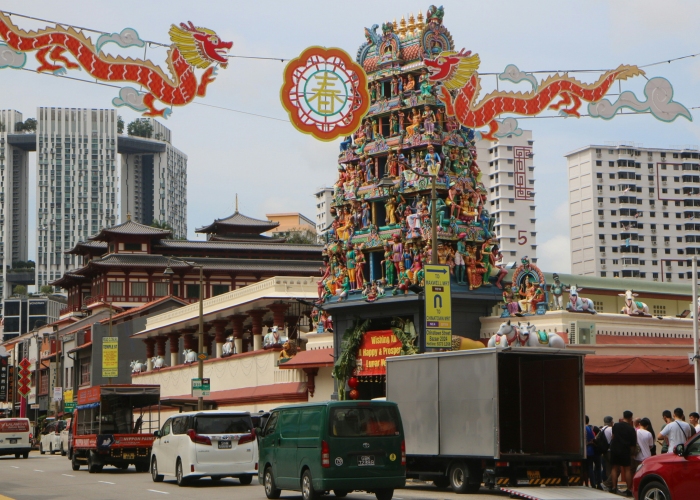
Located northeast of the city center, between Rochor Canal Road and Serangoon Road, Little India reveals a colorful and deeply vibrant side of Singapore. From the moment you arrive, pastel façades, the scent of spices and the lively buzz of markets create a unique atmosphere, almost outside of time.
The Sri Veeramakaliamman Temple immediately draws attention with its detailed sculptures and vivid colors. A little further on, the Tekka Centre blends street food stalls, traditional fabrics and local products, perfect for feeling the neighborhood’s energy. The streets around Buffalo Road invite you to wander without a fixed plan, between golden jewelry shops and fragrant boutiques.
As evening falls, Little India shifts into a different rhythm. Lights reflect in the windows of the Mustafa Centre, open almost around the clock, while restaurants fill the air with the aromas of curry and freshly baked naan bread. The atmosphere becomes warm and almost festive.
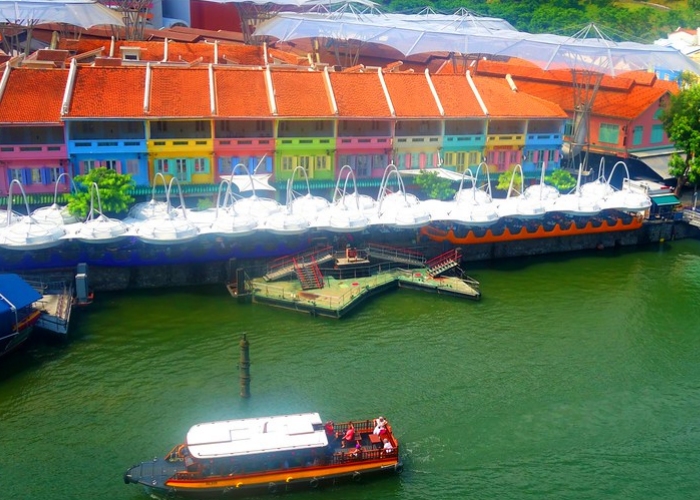
Along the Singapore River, just a few minutes from Marina Bay and the financial district, Clarke Quay reflects Singapore’s lively and festive side. Once a historic trading port, the area now blends colonial heritage with a contemporary atmosphere.
Colorful former warehouses line the quays and host restaurants, cocktail bars and terraces overlooking the water. During the day, the promenade feels calm, perfect for walking toward Boat Quay or Merlion Park. At sunset, lights gradually come on and the mood shifts. The river mirrors the glowing façades, creating an almost cinematic setting.
Among the highlights, a river cruise offers a different perspective on historic bridges and the modern skyline. Those looking for a thrill can spot the G-MAX Reverse Bungy from the main quay. Further away, nearby streets reveal more discreet spots, ideal for extending the evening away from the crowds.
In the heart of the city, Singapore’s museums tell a layered story shaped by ancient traditions and forward-looking ideas. Located near Fort Canning Park, the National Museum of Singapore traces the city’s evolution through immersive galleries and an elegant architecture that blends colonial heritage with modern design.
A few minutes away, the Asian Civilisations Museum, set along the Singapore River near Boat Quay, explores the cultures that have shaped Asian identity. Rare artifacts, maritime stories and multicultural influences reveal a deeper side of the region.
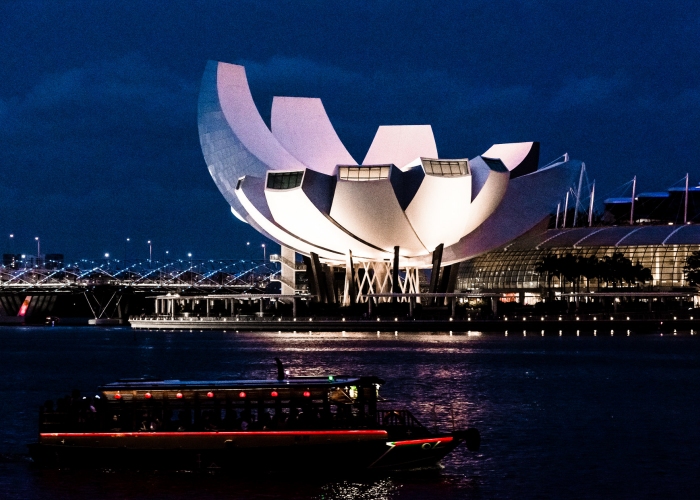
Facing Marina Bay Sands, the ArtScience Museum immediately stands out with its lotus-shaped silhouette. Its exhibitions combine digital art, technology and interactive experiences, creating a surprising space where imagination takes center stage.
Not far from Orchard Road, in the Armenian Street district, the Peranakan Museum immerses visitors in the colorful world of Peranakan culture. Embroidered costumes, delicate porcelain and traditional décor tell an intimate story, almost like stepping into a family heritage.