










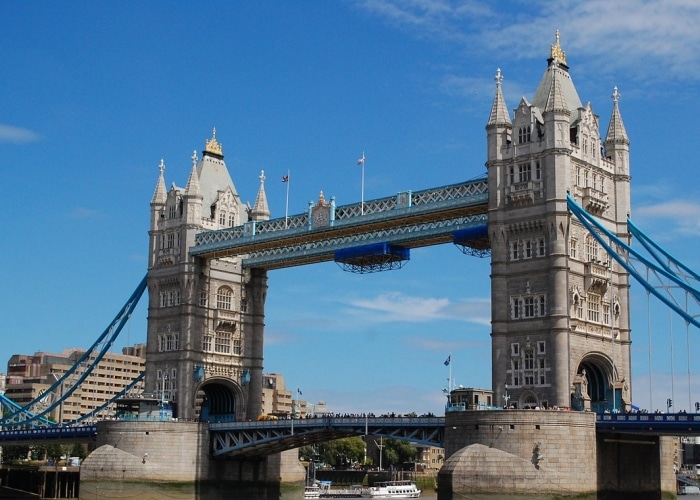
On the banks of the Thames, Tower Bridge keeps its graceful, almost mechanical look — a bascule bridge still able to lift for passing ships. Its neo-Gothic towers frame the river, blending steel and stone. You often pause halfway across, your gaze drifting from the quays to the sails gliding by.
To watch the bridge rise, it’s best to check the lift schedule before your visit. The high-level walkway offers a glass-floored crossing with a dizzying view of the road and the Thames below. The moment is simple, a little vertiginous, and unforgettable.
Just nearby, the Tower of London has been keeping watch from the opposite bank for centuries, its thick walls full of stories. Moored below, the HMS Belfast recalls other journeys at sea. Around Shad Thames, the old warehouses create narrow passages where the wind whips through.
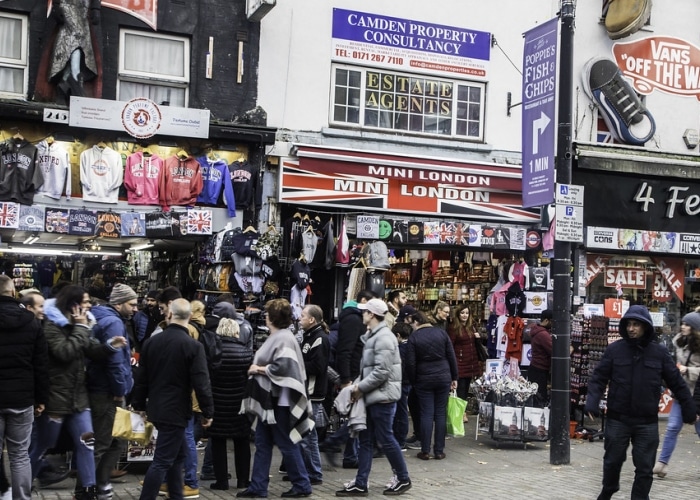
The spicy smell of street food mixes with the sound of amplified guitars — that’s often how a day begins in Camden Town. The markets overflow with colorful fabrics, metallic jewelry, and stacks of worn vinyl, while the painted facades seem determined to grab your attention. Nothing is subtle here — everything makes a statement.
Yet the canal softens the buzz, with moored narrowboats and makeshift terraces inviting you to pause. The contrast is part of the charm — noise and motion on one side, liquid calm on the other. Time seems to slow along the water’s edge.
A detour through Regent’s Park adds a deeper breath, with wide lawns, landscaped gardens, and families scattered across the grass. Climb up to Primrose Hill and the city stretches out before you, a panorama of glass towers and old brick buildings gathered under the same sky.
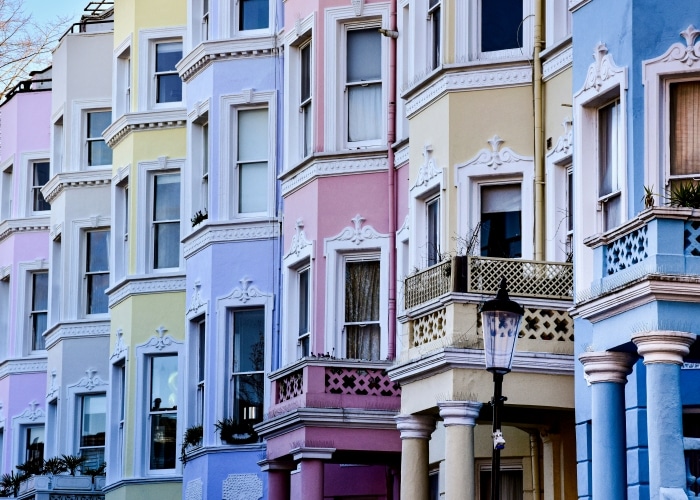
Pastel facades, crowded markets, café terraces spilling onto the sidewalks — that’s often what comes to mind when you think of Notting Hill. The neighborhood pulses with a special energy, a mix of quiet residential charm and bursts of lively chaos. It’s easy to get lost here, and just as easy not to care.
The Portobello Road market is still the main draw, with stalls of fruit, antiques, and ever-changing clothes. On Saturdays, the crowds thicken, chatter mixing with the shouts of vendors. The whole area feels like an impromptu street party.
Nearby Kensington Gardens offers a calmer contrast, with wide lawns and neat, tree-lined paths. Farther along, Holland Park draws those seeking a pause among its Japanese gardens or under its centuries-old trees. The shift feels seamless, like a deep breath after the bustle.
In August, the Caribbean carnival takes over Notting Hill, flooding the streets with music and color. But even without an event, the neighborhood carries a sense of constant motion, a backdrop that keeps changing. You leave with an impression that’s layered, not always clear, but impossible to forget.
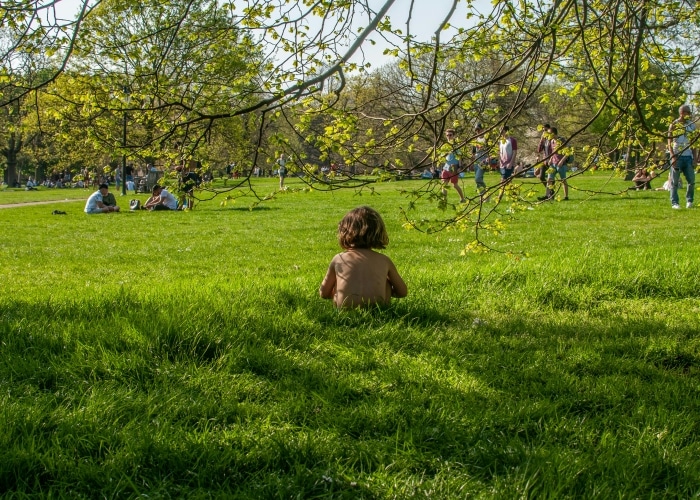
A vast green carpet crisscrossed with paths and dotted with lakes — that’s how Hyde Park first appears. Joggers share the space with families, cyclists, and those simply stretched out on the grass. The city noise seems to fade after just a few steps.
By the Serpentine, the water draws walkers, rowers, and birds squabbling along the shore. You stop for a coffee or to watch the ripples twist with the wind. The park feels different with each season — lively in summer, quieter and more contemplative in winter.
The Speakers’ Corner recalls another side of the park, a place for free speech where talks and debates have been held for decades. Not far away, Kensington Palace rises with its restrained facades, framed by formal gardens. History blends seamlessly with the everyday strolls of those passing through.

Piccadilly Circus delivers an instant rush — there’s nothing quiet about it. It pulses day and night, with laughter, crossing red buses, and the music of street performers. You take it in more like a live stage than an ordinary square.
Its statues and fountains serve as meeting points, simple markers in the middle of the motion. You might sit for a few minutes on the steps, watching the swirl of taxis and pedestrians. Soon your eyes adjust to the neon signs flashing relentlessly.
Just steps away, Leicester Square draws crowds with its cinemas, while Shaftesbury Avenue lines up theaters and colorful marquees. Farther along, Regent Street curves gracefully, its elegant facades lined with shops. The transition feels seamless, a continuous chain of urban scenes.